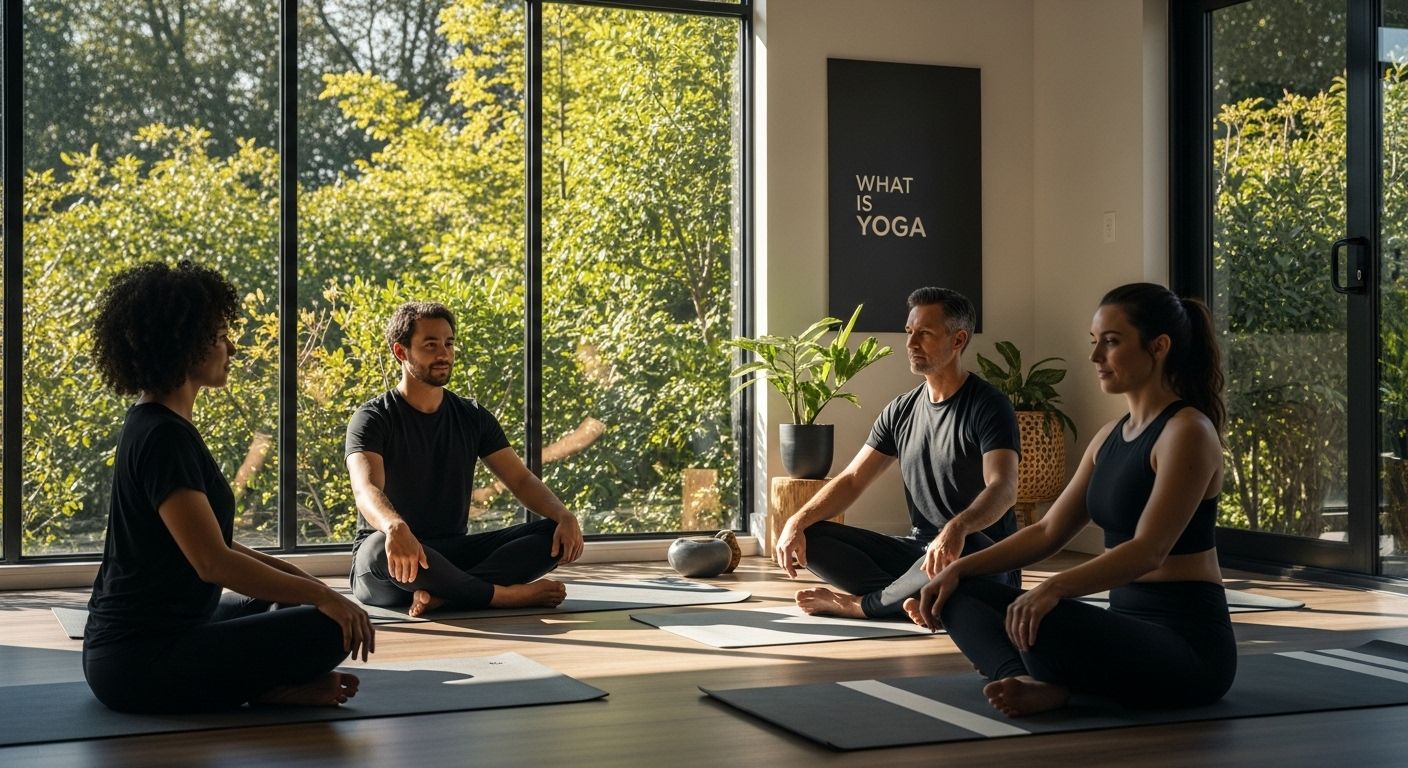
Hey there, if you’re curious about Ashtanga yoga, you’re in for a treat. I still remember stumbling into my first class about a decade ago, thinking it was just another stretch session to loosen up after a long week at the desk. Boy, was I wrong—it kicked my butt in the best way possible, leaving me drenched but oddly peaceful. Ashtanga isn’t your casual flow; it’s a disciplined path that blends movement, breath, and philosophy into something transformative. In this guide, we’ll dive deep into what makes it tick, from its roots to how you can start practicing today. Whether you’re a total newbie or looking to deepen your routine, let’s unpack this ancient gem together.
What Exactly is Ashtanga Yoga?
Ashtanga yoga stands out as a vigorous style of hatha yoga that syncs breath with a set series of postures. It’s all about building heat inside the body to purify and strengthen it, kind of like turning up the thermostat on your inner furnace. Practitioners move through sequences with focused inhales and exhales, creating a meditative rhythm that quiets the mind while challenging the physique.
This practice draws from Patanjali’s Yoga Sutras, emphasizing eight limbs that guide you toward self-realization. Unlike gentler forms, Ashtanga demands consistency—think six days a week if you’re going traditional. It’s not just exercise; it’s a lifestyle that fosters discipline and awareness.
The Rich History Behind Ashtanga Yoga
Picture this: ancient sages in India scribbling wisdom on palm leaves, laying the groundwork for what we’d call yoga today. Ashtanga’s story starts there, evolving through centuries into the dynamic system we know. It wasn’t always about sweaty sequences; it began as a philosophical blueprint for living ethically and mindfully.
The modern version exploded in popularity thanks to key teachers who brought it to the masses. I once visited Mysore, India, where the practice feels alive in the air—it’s humbling to trace those steps back to its origins.
Origins in Ancient Texts
Ashtanga traces back to the Yoga Korunta, an old manuscript attributed to sage Vamana Rishi, though ants supposedly devoured the original—talk about a plot twist! Patanjali’s Yoga Sutras from around 200 CE formalized the eight limbs, blending ethics, postures, and meditation into a holistic path.
These texts weren’t gym manuals; they aimed to tame the mind’s chaos. Early yogis used them for spiritual enlightenment, not Instagram poses.
Modern Revival by Key Figures
Fast-forward to the 20th century: Tirumalai Krishnamacharya rediscovered and taught the system to his student, K. Pattabhi Jois, who popularized it globally from his shala in Mysore. Jois emphasized vinyasa—linking breath to movement—which made it accessible yet intense.
Today, teachers like Sharath Jois carry the torch, adapting it slightly for Western bodies. My own teacher studied under Jois’s lineage, and sharing that connection always adds depth to my mat time.
Understanding the Eight Limbs of Ashtanga Yoga
The “ashtanga” part means “eight limbs” in Sanskrit, like branches of a tree supporting your growth. It’s not just about twisting into pretzels; these limbs build a foundation for inner peace. Mastering them feels like unlocking levels in a game—each one reveals more about yourself.
Think of it as a roadmap: start with ethics, move to physical practice, then dive into meditation. I’ve found that weaving these into daily life turns chaos into calm.
Yama: Ethical Restraints
Yamas are your moral compass—non-violence, truthfulness, non-stealing, continence, and non-greed. They’re like ground rules for harmonious living.
Practicing ahimsa (non-violence) means being kind to yourself on the mat, avoiding injury from ego-driven pushes. It’s funny how skipping that extra chaturanga can feel like a win for self-compassion.
Niyama: Personal Observances
Niyamas focus inward: purity, contentment, self-discipline, self-study, and surrender to a higher power. They’re your self-care toolkit.
Tapas (discipline) keeps me showing up at dawn for practice, even when the bed calls. Contentment, or santosha, helps appreciate progress without chasing perfection.
Asana: Postures
Asanas are the physical poses we associate with yoga, building strength and flexibility. In Ashtanga, they’re fixed in sequences to create internal heat.
These aren’t random; each prepares for the next, like a well-choreographed dance. My backbends used to be stiff, but consistent asanas turned them into fluid expressions.
Pranayama: Breath Control
Pranayama harnesses breath to control energy. Ujjayi breathing— that oceanic sound—fuels the practice.
It’s emotional: deep breaths during tough poses calm racing thoughts. I once held a long inhale through a bind, feeling tension melt away like butter.
Pratyahara: Sensory Withdrawal
Pratyahara pulls senses inward, ignoring distractions. It’s like tuning out the world to tune into yourself.
In a busy class, this limb helps focus on breath over chatter. It’s liberating, creating space for true introspection.
Dharana: Concentration
Dharana sharpens focus on a single point, like a drishti (gaze point) in poses. It trains the mind to stay put.
Drishti in warrior pose keeps me steady amid wobbles. Over time, it spills into life, improving work focus without the coffee jitters.
Dhyana: Meditation
Dhyana is sustained meditation, flowing naturally from concentration. The moving meditation of Ashtanga leads here.
Post-practice savasana often brings this state—pure presence. It’s addictive, that quiet joy bubbling up unbidden.
Samadhi: Enlightenment
Samadhi is the ultimate union, absorbing into the divine. It’s the peak, where ego dissolves.
Glimpses come in deep flows, feeling connected to everything. It’s rare, but chasing it keeps the practice alive.
The Ashtanga Practice: Sequences and Styles
Ashtanga unfolds in six series, each more advanced. Most start with Primary, a detoxifying flow of sun salutes, standing poses, seated twists, and inversions.
Mysore style lets you self-pace with teacher adjustments—intimate and empowering. Led classes guide the group, building community energy.
Primary Series for Beginners
Yoga Chikitsa, or Primary Series, realigns and cleanses the body. It includes forward bends for flexibility and backbends for strength.
Beginners modify—use props if needed. My first Primary felt endless, but breaking it down made it manageable.
Intermediate and Advanced Series
Nadi Shodhana (Intermediate) purifies nerves with deeper twists and arm balances. Advanced series demand mastery, like Sthira Bhaga for stability.
Few reach them, but the journey refines you. I’ve peeked at Intermediate; it’s humbling yet exhilarating.
Here’s a quick comparison table of the series:
| Series Name | Focus | Difficulty Level | Key Benefits |
|---|---|---|---|
| Primary (Yoga Chikitsa) | Detox and alignment | Beginner to Intermediate | Builds strength, flexibility, purifies body |
| Intermediate (Nadi Shodhana) | Nerve cleansing | Intermediate to Advanced | Enhances energy flow, mental clarity |
| Advanced A-D (Sthira Bhaga) | Strength and grace | Advanced | Deepens humility, advanced control |
Benefits of Ashtanga Yoga
Regular Ashtanga boosts physical prowess—stronger muscles, better endurance, and detox through sweat. Mentally, it sharpens focus and reduces stress, like a reset button for your brain.
Emotionally, it fosters resilience. I weathered a tough breakup with daily practice; the mat became my therapist.
Pros and Cons of Ashtanga Yoga
Pros:
- Builds discipline and routine
- Improves cardiovascular health
- Enhances mindfulness
- Community support in shalas
- Adaptable with modifications
Cons:
- Physically demanding, risk of injury if pushed
- Time-intensive (up to 90 minutes)
- Less variety than eclectic classes
- Requires commitment; not for casual dabblers
- Can feel rigid for free spirits
Comparing Ashtanga to Other Yoga Styles
Ashtanga vs. Vinyasa: Both flow with breath, but Ashtanga has fixed sequences while Vinyasa varies creatively. Vinyasa suits variety lovers; Ashtanga builds mastery.
Ashtanga vs. Hatha: Hatha is slower, pose-focused; Ashtanga’s dynamic pace amps intensity. Hatha eases beginners in; Ashtanga challenges them.
Ashtanga vs. Yin: Yin holds poses passively for connective tissue; Ashtanga’s active for muscles. Pair them for balance—I do Yin on rest days.
How to Get Started with Ashtanga Yoga
Dip your toes in with a beginner-friendly class. Look for Mysore-style to learn at your pace—teachers adjust as you go.
Where to get started: Local studios like those affiliated with the Ashtanga Yoga Institute, or online via platforms like Omstars. In India? Head to Mysore for authenticity.
Best tools for practice: A sturdy mat (Manduka PRO is gold), breathable clothes, and books like “Ashtanga Yoga: The Practice Manual” by David Swenson. Apps like Ashtanga Yoga App track sequences.
Start slow: Five sun salutes daily build habit. Join a workshop for basics—my first one demystified the breath work.
For gear, check YogaOutlet for mats or Amazon for props. Internal link: See our guide to yoga essentials.
People Also Ask
Based on common Google queries, here are real questions folks search:
What is the difference between Ashtanga and Vinyasa yoga? Ashtanga follows fixed sequences; Vinyasa allows teacher creativity, but both link breath to movement.
Is Ashtanga yoga good for weight loss? Yes, its cardio-like intensity burns calories and builds muscle, aiding metabolism.
What are the 8 limbs of Ashtanga yoga? They include yama, niyama, asana, pranayama, pratyahara, dharana, dhyana, and samadhi for holistic growth.
Can beginners do Ashtanga yoga? Absolutely, with modifications and guidance—start with Primary Series.
How often should you practice Ashtanga yoga? Traditionally six days a week, but three times works for starters.
FAQ
Is Ashtanga yoga suitable for all ages?
Yes, with adaptations. Seniors might modify inversions, while kids benefit from the discipline. Always consult a doctor first.
What should I eat before an Ashtanga session?
Light and early—fruit or nuts two hours prior. Avoid heavy meals to prevent discomfort during twists.
How long does a full Primary Series take?
About 60-90 minutes, depending on pace. Shorten for beginners.
Does Ashtanga help with anxiety?
Definitely; the breath focus calms the nervous system. Studies show yoga reduces cortisol levels.
Where can I find certified Ashtanga teachers?
Check the official KPJAYI site or Yoga Alliance directories. Local shalas often list authorized instructors.
Wrapping up, Ashtanga yoga isn’t just a workout—it’s a journey that reshapes body and mind. From my shaky first sun salute to flowing through series with ease, it’s taught me patience and power. Give it a shot; you might find that inner spark you’ve been missing. For more on yoga styles, explore our Hatha guide. External resource: Dive deeper at Yoga Basics. Remember, the mat awaits—namaste.